
Table of Contents
- What Is Custom Sports Betting Platform Development?
- Why Invest in Custom Sports Betting Development?
- Key Features of a Sports Betting Platform
- Sports Betting Technology Stack
- Sports Betting Platform Development Process
- Custom Sports Betting Development Packages
- Additional Sports Betting Modules
- Why Choose webOdoctor for Sports Betting Development?
- Frequently Asked Questions
The sports betting industry has transformed significantly, creating new opportunities for businesses that want to launch their own betting platforms. Modern operators are no longer limited to traditional sportsbook models. With custom sports betting platform development, businesses can create scalable websites, betting exchanges, mobile applications, real-time betting systems, and localized solutions designed for specific markets.
Whether you are planning to launch a sportsbook in Europe, Latin America, Africa, or another regulated market, a custom-built sports betting platform gives you greater control over functionality, branding, integrations, scalability, and business operations.
At webOdoctor, we develop secure and scalable sports betting platforms tailored to the requirements of startups, established operators, and businesses entering new regulated markets.
Custom sports betting platform development involves building a sportsbook or betting exchange according to the operator's specific business model, target market, branding, technical requirements, and regulatory environment.
Unlike an off-the-shelf platform, a custom solution allows businesses to control the platform architecture, user experience, integrations, payment methods, betting functionality, and future development roadmap.
A modern platform can support:
- Pre-match betting
- Live and in-play betting
- Sports betting exchanges
- Real-time odds
- Mobile applications
- Multiple payment methods
- Multi-language functionality
- Multi-currency transactions
- Risk and fraud management
- Affiliate and bonus systems
- KYC and AML integrations
- Advanced reporting and analytics
This flexibility allows operators to build a platform around their specific market instead of adapting their business to the limitations of generic software.
Why Invest in Custom Sports Betting Development?
Many businesses initially consider white-label sportsbook solutions because they can provide a faster route to market. However, as an operator expands, limitations related to customization, integrations, branding, ownership, and scalability can become more important.
A custom sports betting platform provides greater control over the complete technology ecosystem.
Complete Platform Ownership
With a custom development approach, businesses can have greater control over the source code, database, platform architecture, and intellectual property according to the agreed development and ownership model.
Flexible Customization
Every market has different requirements. A custom platform can be adapted for:
- Local payment gateways
- Regional sports
- Local languages
- Multiple currencies
- Country-specific user experiences
- Regulatory requirements
- Local promotional models
Scalable Architecture
A scalable architecture allows operators to expand their sports coverage, user base, payment options, applications, and geographic presence without rebuilding the entire platform.
Enhanced Security
Security is critical for betting platforms because they manage user accounts, financial transactions, personal information, and betting activity.
Depending on the platform requirements, security features can include:
- SSL encryption
- KYC verification
- AML monitoring
- Fraud detection
- Secure wallet management
- User authentication
- Transaction monitoring
- Responsible gaming controls
Key Features of a Sports Betting Platform
A successful sports betting platform requires more than a betting interface. It needs a complete technology ecosystem covering users, payments, odds, risk management, administration, and integrations.
User Registration and Account Management
The platform can provide:
- Fast registration
- Email and mobile verification
- OTP authentication
- Social login
- User profiles
- Responsible gaming controls
- KYC verification
- Account management
Digital Wallet
A secure wallet allows users to deposit funds, withdraw winnings, manage bonuses, and track transactions.
Depending on the target market, the platform can support:
- Card payments
- Bank transfers
- E-wallets
- UPI where legally permitted
- Cryptocurrency wallets
- Bonus wallets
- Cashback wallets
Potential payment integrations may include Visa, Skrill, Neteller, PayPal, bank transfers, and other region-specific providers.
Sports Betting Engine
The betting engine is one of the most important components of the platform.
It can support:
- Pre-match betting
- Live betting
- Multiple betting markets
- Bet placement
- Bet validation
- Automated settlement
- Cash-out functionality
- Market suspension
- Bet history
- Odds updates
For exchange-based platforms, additional functionality can include back bets, lay bets, market matching, partial matching, and position trading.
Real-Time Sports Odds
Real-time data and odds integrations allow operators to provide updated betting markets across multiple sports.
Supported sports can include:
- Football
- Cricket
- Tennis
- Basketball
- Baseball
- Ice hockey
- MMA
- Esports
- Horse racing
Integrating reliable sports data providers helps maintain accurate event information, odds, scores, and live betting markets.
Admin Dashboard
An advanced administration panel provides operators with centralized control over the platform.
Typical functions include:
- User management
- Bet management
- Risk management
- Commission configuration
- Payment monitoring
- Revenue reports
- Market monitoring
- Fraud detection
- Bonus management
- Analytics
- Content management
- Platform configuration
Multi-Language Support
Operators targeting international markets can provide localized experiences through multiple languages.
Common options include:
- English
- German
- French
- Spanish
- Hindi
- Japanese
Additional languages can be integrated based on the target market.
Multi-Currency Support
A custom betting platform can be configured to support multiple fiat currencies and, where legally and technically appropriate, cryptocurrency transactions.
This is particularly useful for operators serving customers across multiple jurisdictions.
Live Betting
In-play betting allows users to place wagers while sporting events are taking place.
Important live betting functionality can include:
- Live scores
- Live odds
- Real-time market updates
- Instant bet settlement
- Cash out
- Market suspension
- Live event tracking
API Integrations
A custom sports betting platform can integrate with third-party services to extend its capabilities.
Common integrations include:
- Sports odds APIs
- Sports data APIs
- Payment APIs
- CRM systems
- Affiliate platforms
- Identity verification services
- Marketing automation tools
- Live streaming services
- Analytics platforms
- Notification services
Sports Betting Technology Stack
The technology stack should be selected according to the platform's performance, scalability, security, integration, and maintenance requirements.
Frontend Technologies
Potential frontend technologies include:
- React.js
- Next.js
- HTML5
- CSS3
- Flutter for cross-platform mobile applications
Backend Technologies
Depending on the project requirements, the backend can be developed using:
- Node.js
- NestJS
- Laravel
- Golang
High-performance technologies can be used for components that require fast processing, including betting engines and real-time market systems.
Database
Database technologies may include:
- MongoDB
- Redis
- Other database systems based on application requirements
Redis can be particularly useful for caching and high-speed data access in real-time applications.
Cloud Infrastructure
Cloud infrastructure can be deployed using providers such as:
- Amazon Web Services (AWS)
- Microsoft Azure
The infrastructure can be designed for scalability, availability, monitoring, and performance.
DevOps and Performance
DevOps technologies and practices can include:
- Docker
- CI/CD pipelines
- Cloudflare CDN
- Automated monitoring
- Load balancing
- Backup systems
- Performance monitoring
Sports Betting Platform Development Process
Developing a custom sports betting website requires a structured process covering planning, design, development, testing, deployment, and ongoing maintenance.
1. Business and Requirement Analysis
The development team first identifies:
- Target market
- Target country
- Regulatory requirements
- Revenue model
- Sports coverage
- Payment preferences
- User types
- Required integrations
- Platform features
This stage establishes the technical and commercial requirements for the project.
2. UI/UX Design
The design team creates a betting interface focused on usability, accessibility, mobile responsiveness, and efficient navigation.
Important interfaces may include:
- Homepage
- Sports listing
- Event pages
- Betting markets
- Bet slip
- User dashboard
- Wallet
- Promotions
- Mobile application screens
- Admin dashboard
3. Platform Development
The development phase brings the platform components together.
Development can include:
- Frontend
- Backend
- Betting engine
- Wallet
- User management
- Admin panel
- Mobile applications
- Payment integration
- Odds integration
- Third-party APIs
4. Testing and Security
Before launch, the platform should undergo comprehensive testing.
Testing may include:
- Functional testing
- Performance testing
- Load testing
- Security testing
- Penetration testing
- API testing
- Payment testing
- Mobile testing
- Cross-browser testing
5. Deployment
After successful testing, the platform can be deployed to scalable cloud infrastructure.
Deployment may include:
- Server configuration
- Database deployment
- SSL configuration
- CDN setup
- Monitoring
- Backup configuration
- Performance optimization
6. Maintenance and Support
Sports betting technology requires continuous maintenance because APIs, security requirements, operating systems, payment systems, and platform functionality evolve over time.
Ongoing services can include:
- Security updates
- API upgrades
- Feature enhancements
- Bug fixes
- Performance optimization
- Infrastructure monitoring
- Technical support
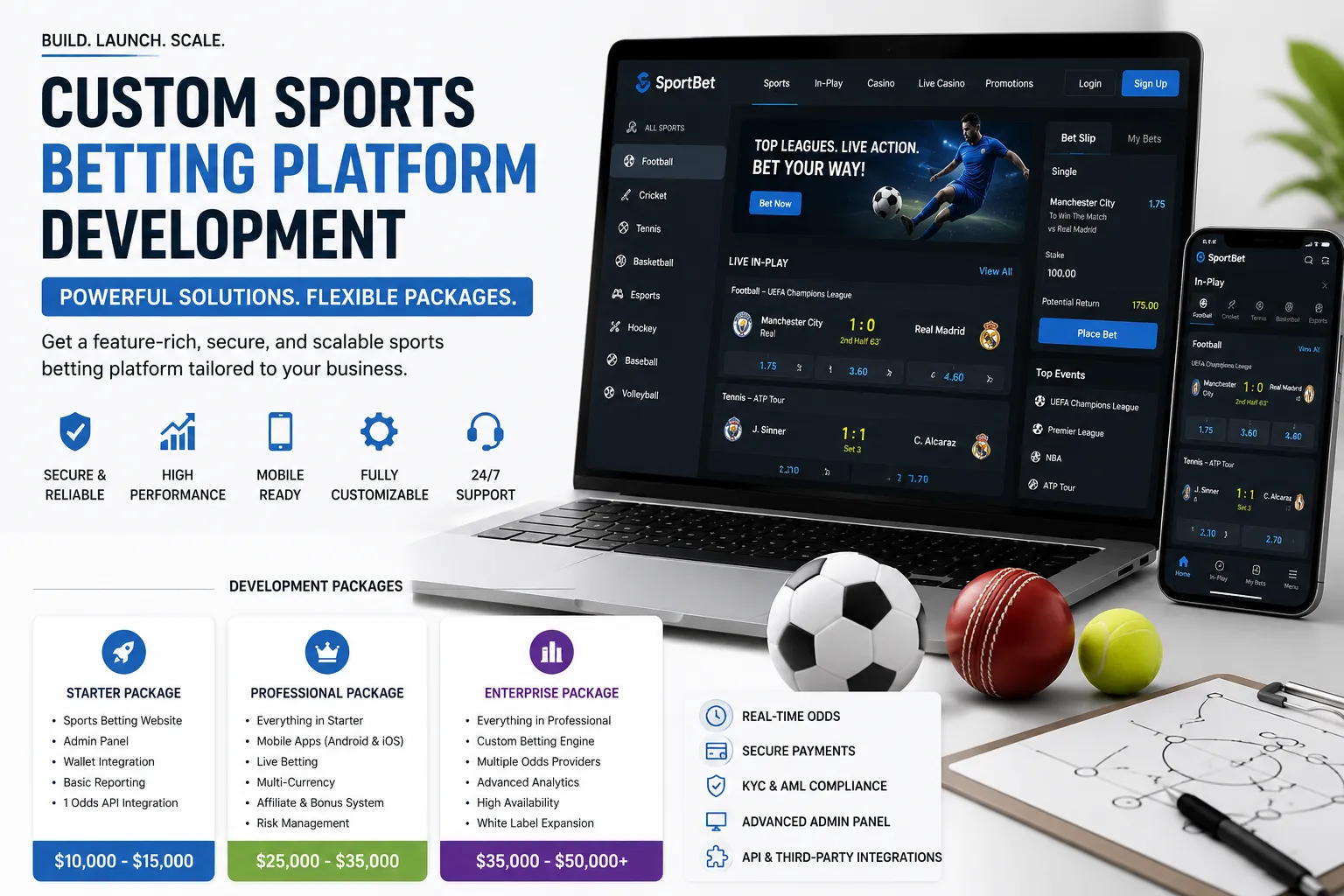
Custom Sports Betting Development Packages
Different operators have different budgets and technical requirements. webOdoctor can structure sports betting development packages according to the size and complexity of the business.
Starter Sports Betting Package
The Starter package is suitable for startups and businesses validating a sports betting concept.
It can include:
- Sports betting website
- Admin panel
- User dashboard
- Wallet integration
- Basic reporting
- Single odds API integration
- Responsive design
Estimated Cost: USD 10,000–15,000
Professional Sports Betting Package
The Professional package is designed for growing operators that require additional functionality and mobile support.
It can include everything in the Starter package, along with:
- Android application
- iOS application
- Multi-currency functionality
- Affiliate module
- Bonus engine
- Live betting
- Risk management
- CRM integration
Estimated Cost: USD 25,000–35,000
Enterprise Sports Betting Package
The Enterprise package is designed for larger operators requiring advanced infrastructure and extensive customization.
Features can include:
- Custom betting or exchange engine
- Multiple odds providers
- Advanced risk monitoring
- High-availability infrastructure
- Load balancing
- Advanced analytics
- White-label expansion capabilities
- API marketplace functionality
Estimated Cost: USD 35,000–50,000+
Actual development costs can vary depending on the required functionality, integrations, regulatory requirements, infrastructure, mobile applications, and customization level.
Additional Sports Betting Modules
Operators can extend their platform with additional modules as their business grows.
Available integrations and modules can include:
- Casino integration
- Live casino
- Fantasy sports
- Horse racing exchange
- Esports betting
- Virtual sports
- Cryptocurrency betting functionality
- Affiliate management
- Loyalty programs
- Push notifications
- AI-based recommendations
- Referral programs
- Cashback systems
- Bonus management
- CRM integration
These modules can be selected according to the operator's business model and target market.
Why Choose webOdoctor INC for Sports Betting Development?
Choosing the right development partner is important when building a betting platform because the project requires expertise across software development, real-time data, payments, security, infrastructure, and user management.
webOdoctor provides custom gaming and sports betting development services for businesses targeting regulated and emerging markets.
Our Sports Betting Development Expertise
Our services include:
- Custom sports betting platform development
- Sports betting exchange development
- White-label sportsbook solutions
- Betting API integration
- Sportsbook mobile app development
- Gaming CRM development
- Affiliate platform development
- Cloud infrastructure deployment
- Technical maintenance and support
- SEO and organic marketing for gaming businesses
- Performance marketing for legally permitted jurisdictions
Our modular development approach allows businesses to expand their platform as their requirements change.
A scalable architecture can help operators add new sports, payment methods, markets, integrations, applications, and business features without rebuilding the entire platform.
For businesses targeting Europe, Latin America, Africa, or other jurisdictions where online betting is legally permitted, the platform should be developed and operated according to the applicable licensing, compliance, and responsible gaming requirements.
Frequently Asked Questions
1. How much does custom sports betting platform development cost?
The cost depends on the platform's functionality, integrations, sports coverage, mobile applications, security requirements, infrastructure, and level of customization. Basic solutions may start around USD 10,000–15,000, while professional and enterprise solutions can range from USD 25,000 to USD 50,000+.
2. How long does it take to develop a custom sports betting platform?
Development time depends on the scope and complexity of the project. A basic sportsbook with standard integrations generally requires less development time than a fully customized platform with mobile applications, multiple odds providers, advanced risk management, and high-availability infrastructure.
3. What features should a custom sports betting platform include?
Core features can include user registration, KYC and AML controls, wallet management, payment gateways, real-time odds, live betting, bet settlement, risk management, bonuses, affiliate functionality, reporting, analytics, and an administrative dashboard.
4. What is the difference between a sportsbook and a betting exchange?
In a traditional sportsbook, users generally place bets against the bookmaker. A betting exchange allows users to bet against other users through a marketplace. Exchange platforms can support functions such as back betting, lay betting, market matching, partial matching, and trading.
5. Can you build a custom sports betting mobile app?
Yes. A custom sports betting platform can be extended with Android and iOS applications. Mobile apps can support live betting, real-time odds, wallet management, bet tracking, account management, notifications, and other sportsbook functionality.
6. Can a sports betting platform integrate real-time odds APIs?
Yes. Third-party sports data and odds APIs can be integrated to provide event information, markets, odds, scores, and live betting data. Multiple providers can also be integrated when broader sports coverage or additional redundancy is required.
7. Can a sports betting platform support multiple currencies and languages?
Yes. Custom platforms can support multiple currencies and languages based on the target markets. Localization can include currencies, languages, payment methods, sports, promotions, and other market-specific functionality.
8. What payment methods can be integrated into a sports betting platform?
Depending on the target jurisdiction and payment provider availability, integrations can include cards, bank transfers, e-wallets, UPI where legally permitted, and cryptocurrency wallets. Payment methods should be selected according to the applicable laws and licensing requirements.
9. Can a custom betting platform include a risk management system?
Yes. Risk management functionality can help operators monitor betting activity, identify unusual patterns, configure betting limits, manage exposure, and monitor potentially fraudulent activity.
10. How do I choose a sports betting platform development company?
Look for a development partner with experience in sportsbook technology, real-time odds integrations, betting engines, payment systems, security, mobile applications, cloud infrastructure, and the technical requirements of your target market. It is also important to evaluate previous projects, development capabilities, support services, scalability, and integration expertise.